Luzern Health School HFGZ
Luzern, Switzerland
2015
New laboratories
and lecture hall facilities
for the University of Luzern
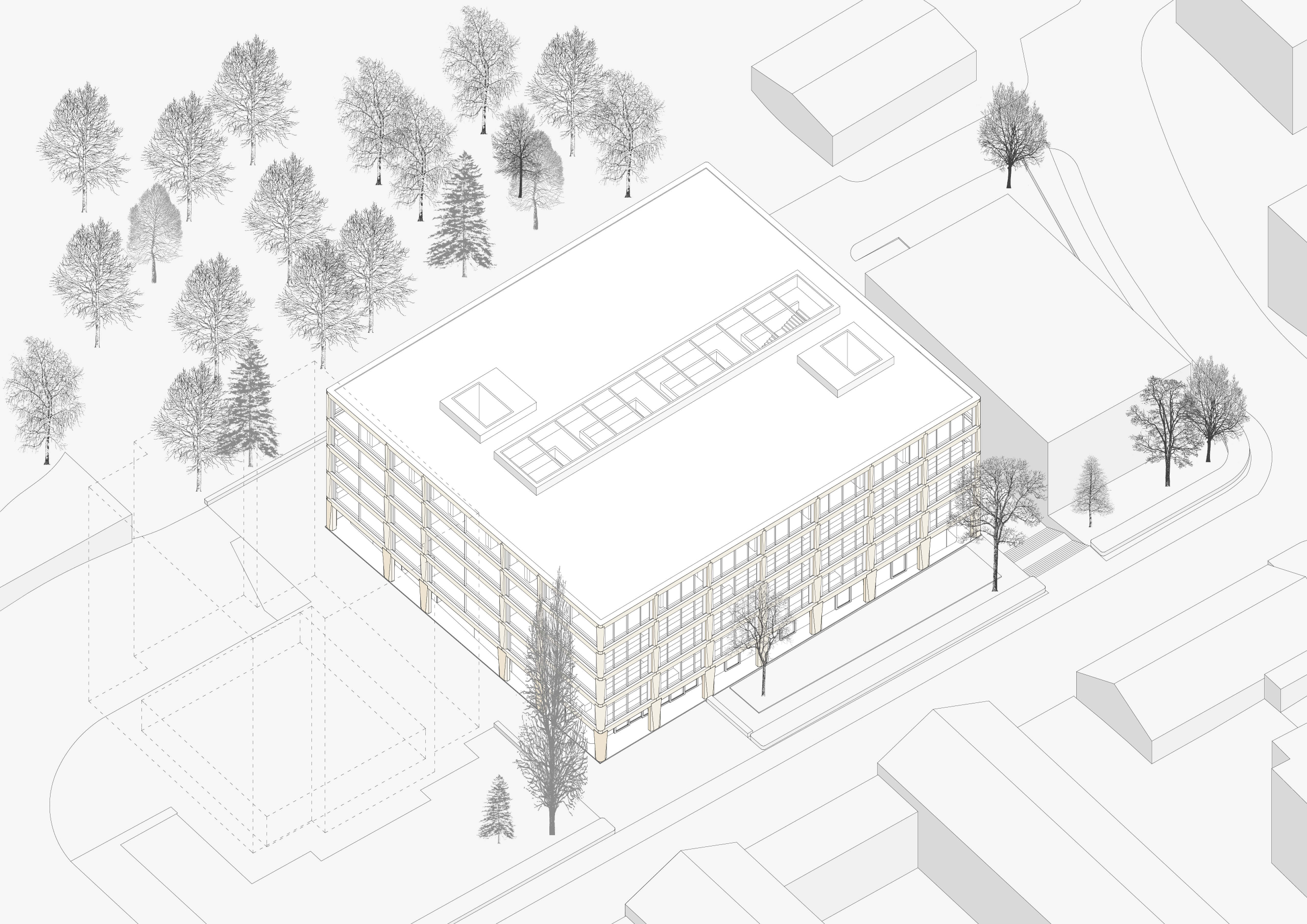
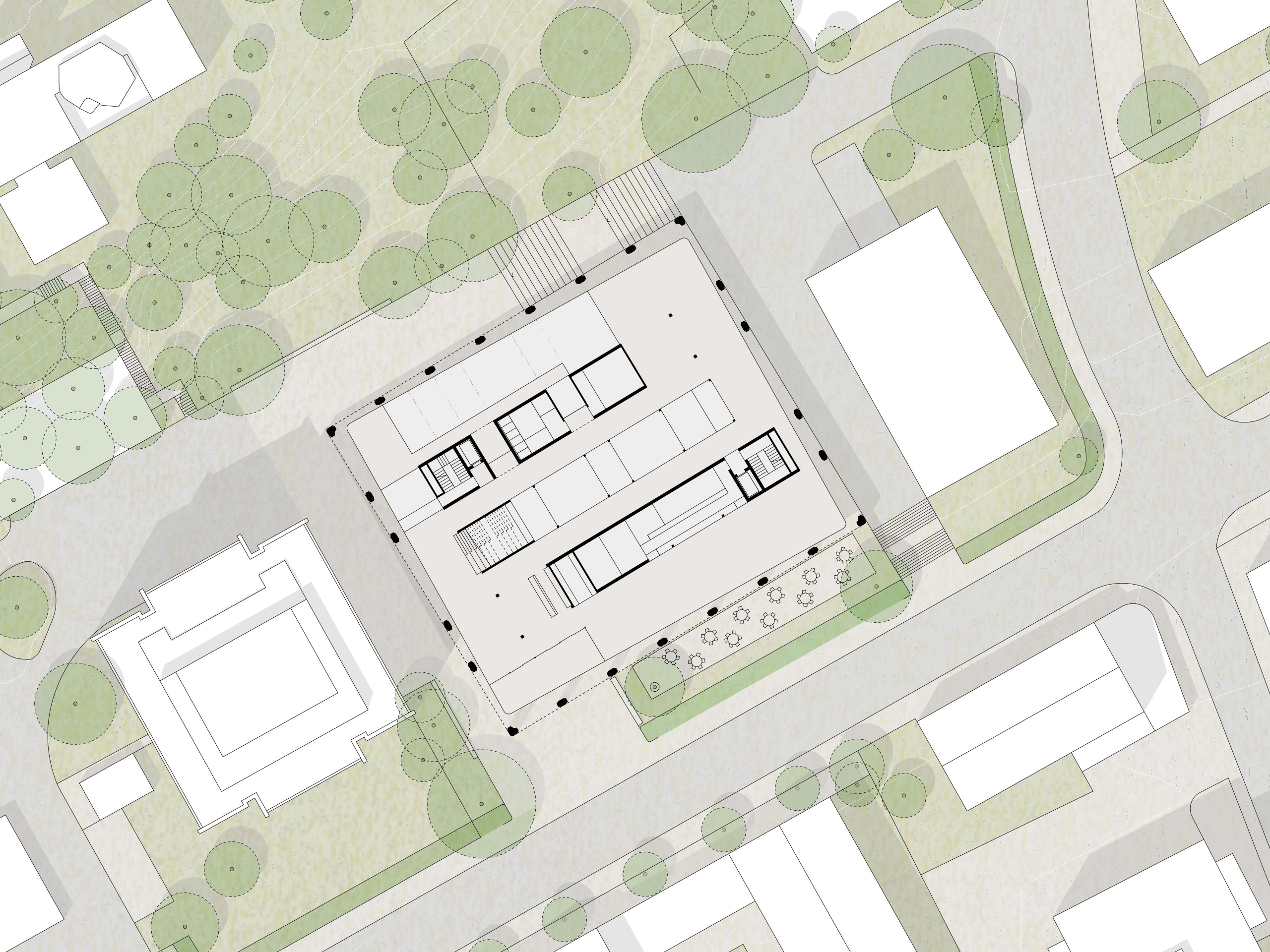
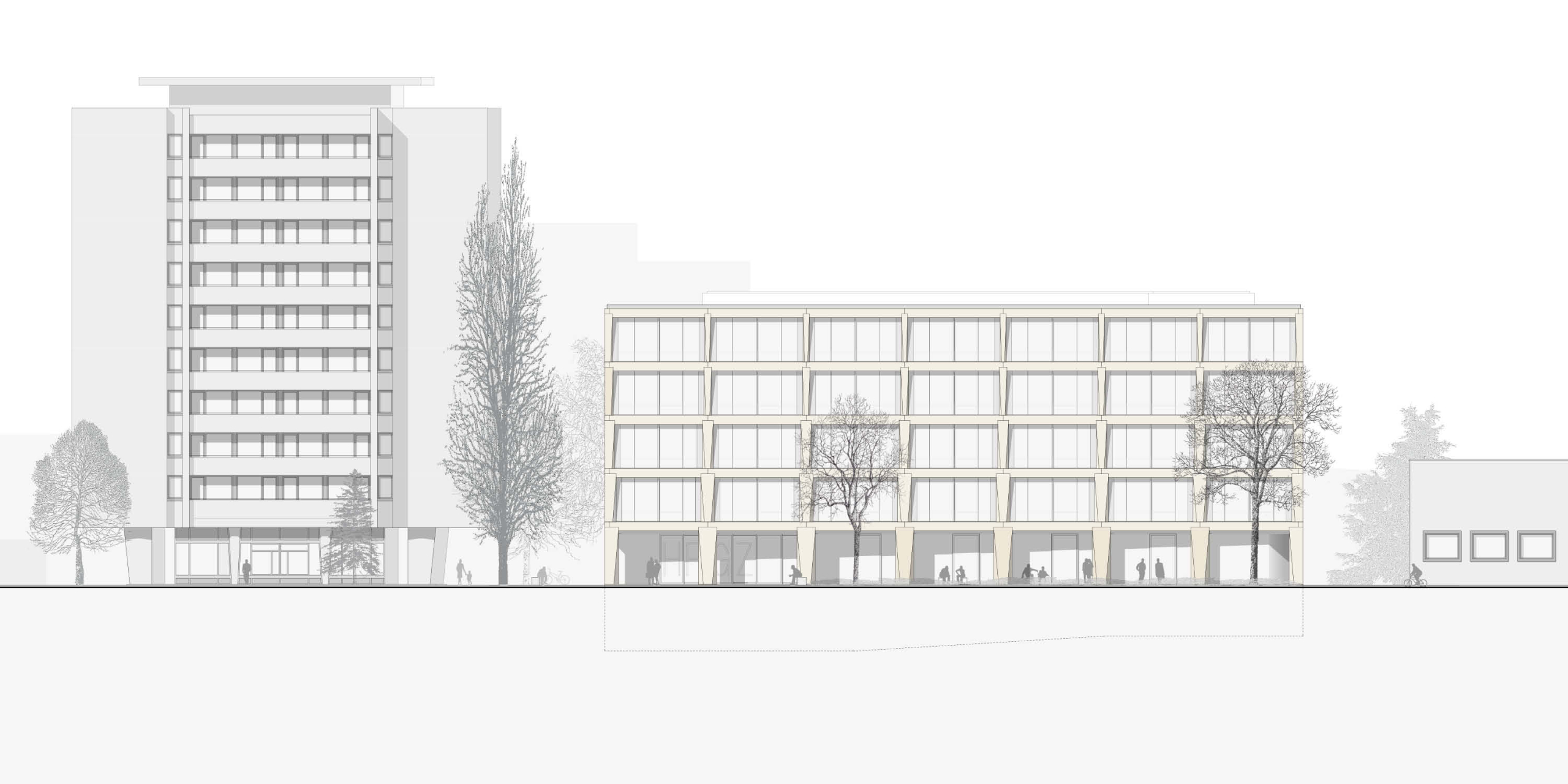
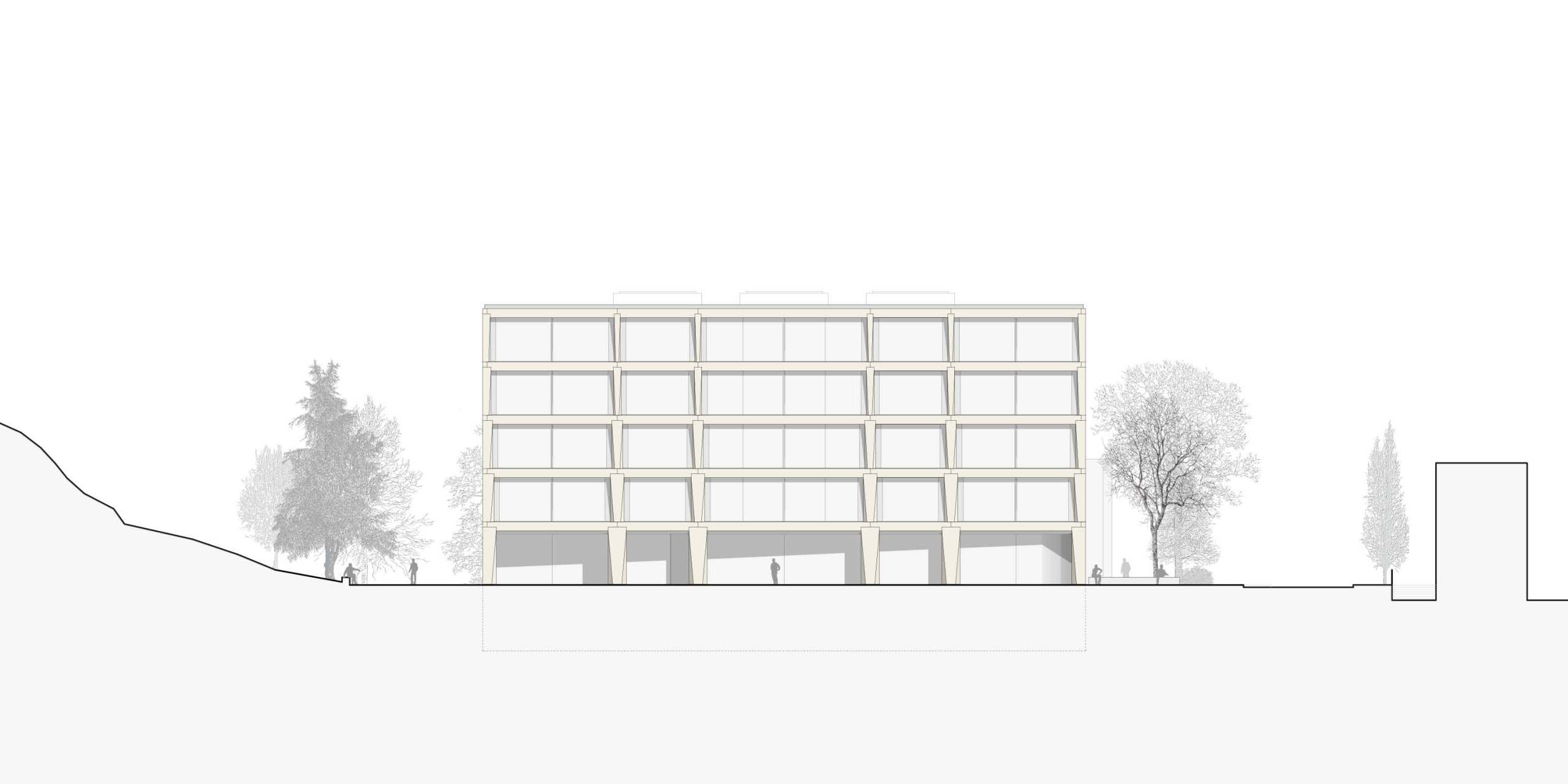
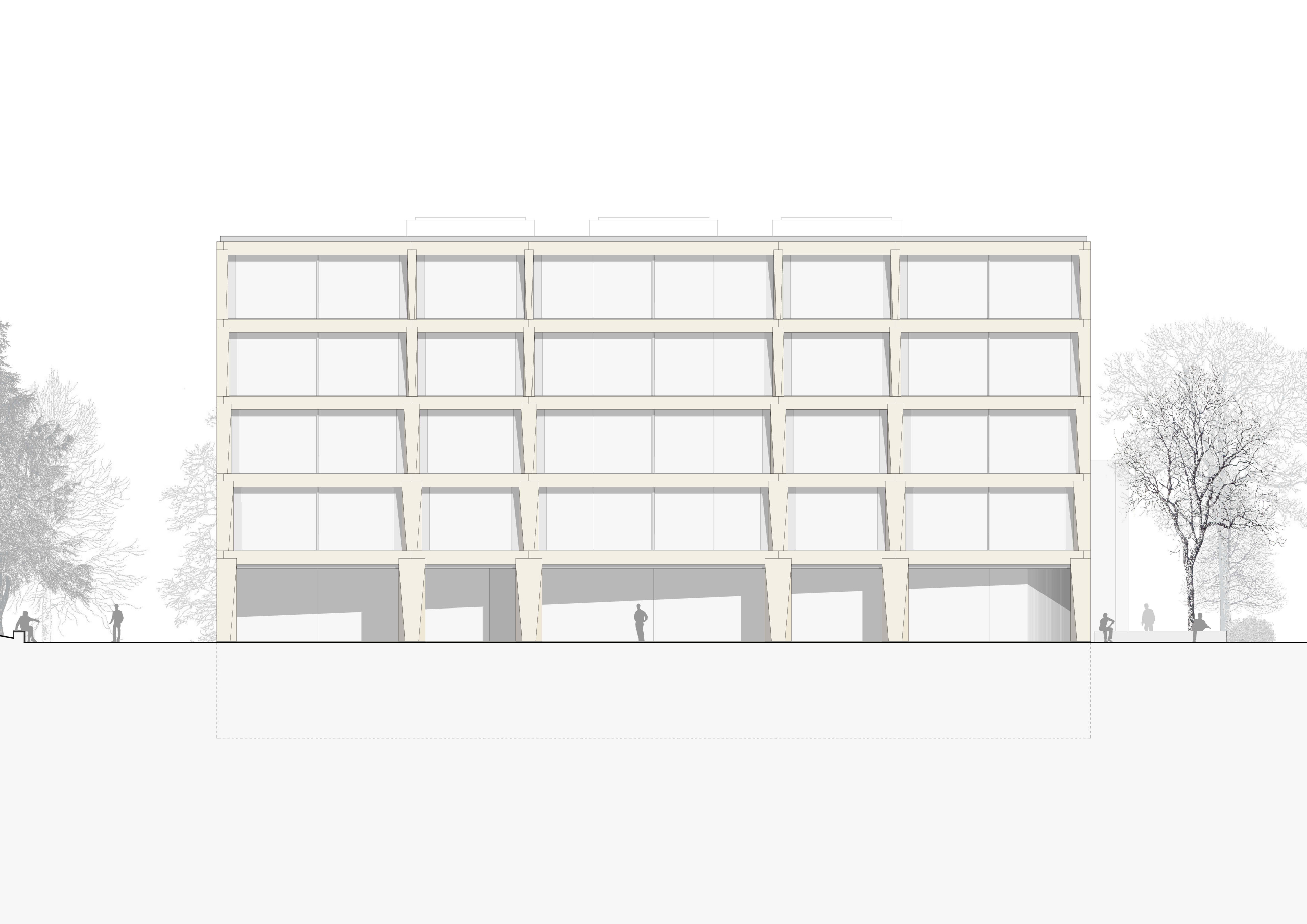
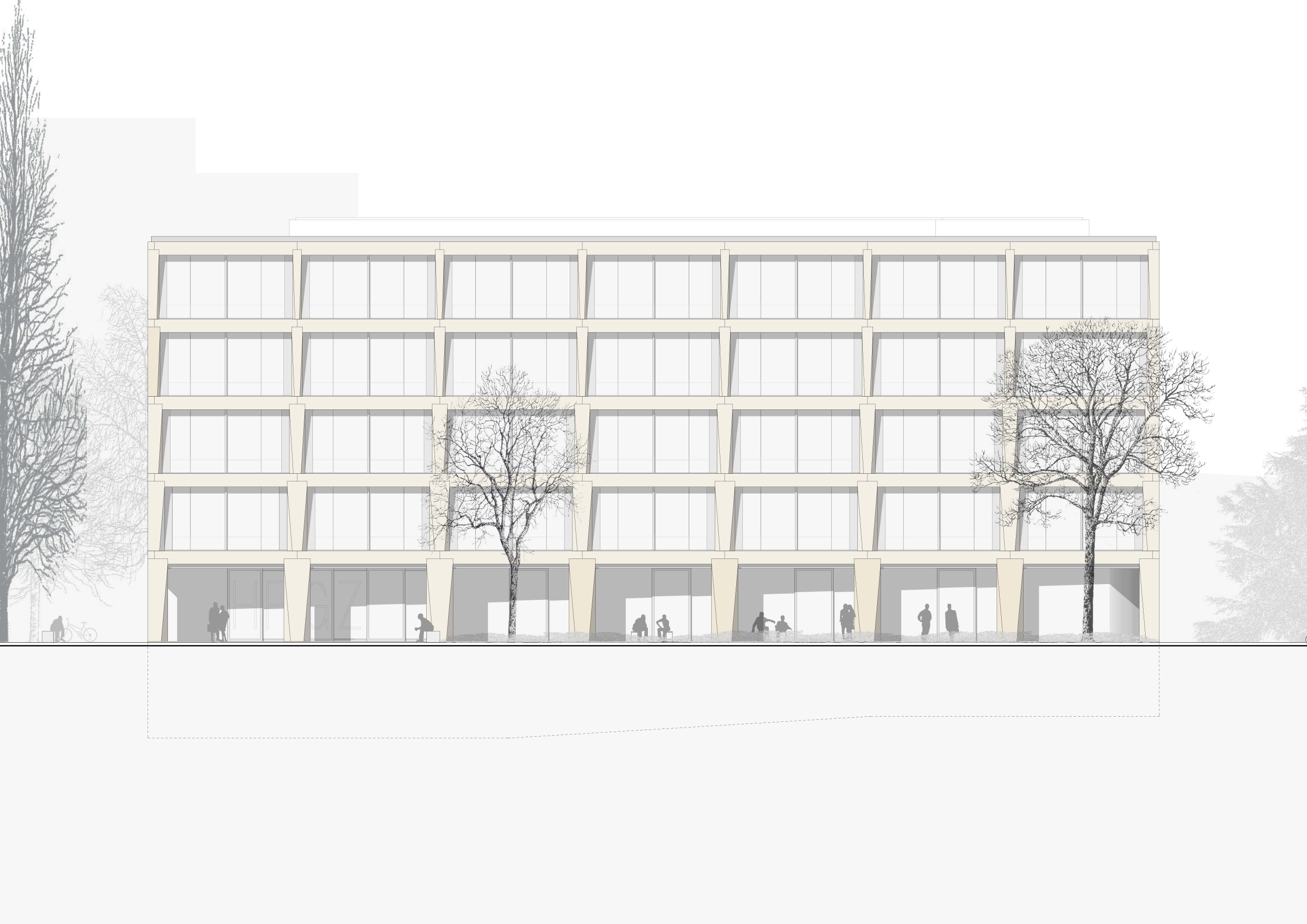
The building is located within the campus of the University of Applied Sciences of Central Switzerland in a constrained plot between existing buildings. The design proposal makes use of the allowed buildable surface to create a building strategy bounded by compactness, unity, strong urban identity, spatial flexibility and transparency. By using the nearly the maximum footprint available the built volume is reduced and stays within the 21m maximum height, limiting itself to 6 floors. This strategy allows the proposed building to read as an extremely compact, clearly edged body positioned in the plot in such a way that establishes a clear urban hierarchy with the surrounding buildings and outside spaces. The volume simplicity gives an object-like quality to the proposal, which allows the new School of Health to stand out as an exceptional building, as perceived from the main street. It also allows for maximum flexibility of use within the layout, and a clear differentiation of circulation, service and served areas. The use of the maximum footprint increases the tension between the new and the neighbouring buildings. As a reaction to this, the proposal aims to balances its volume with an architectural response privileging lightness and transparency in its relation to the surroundings.
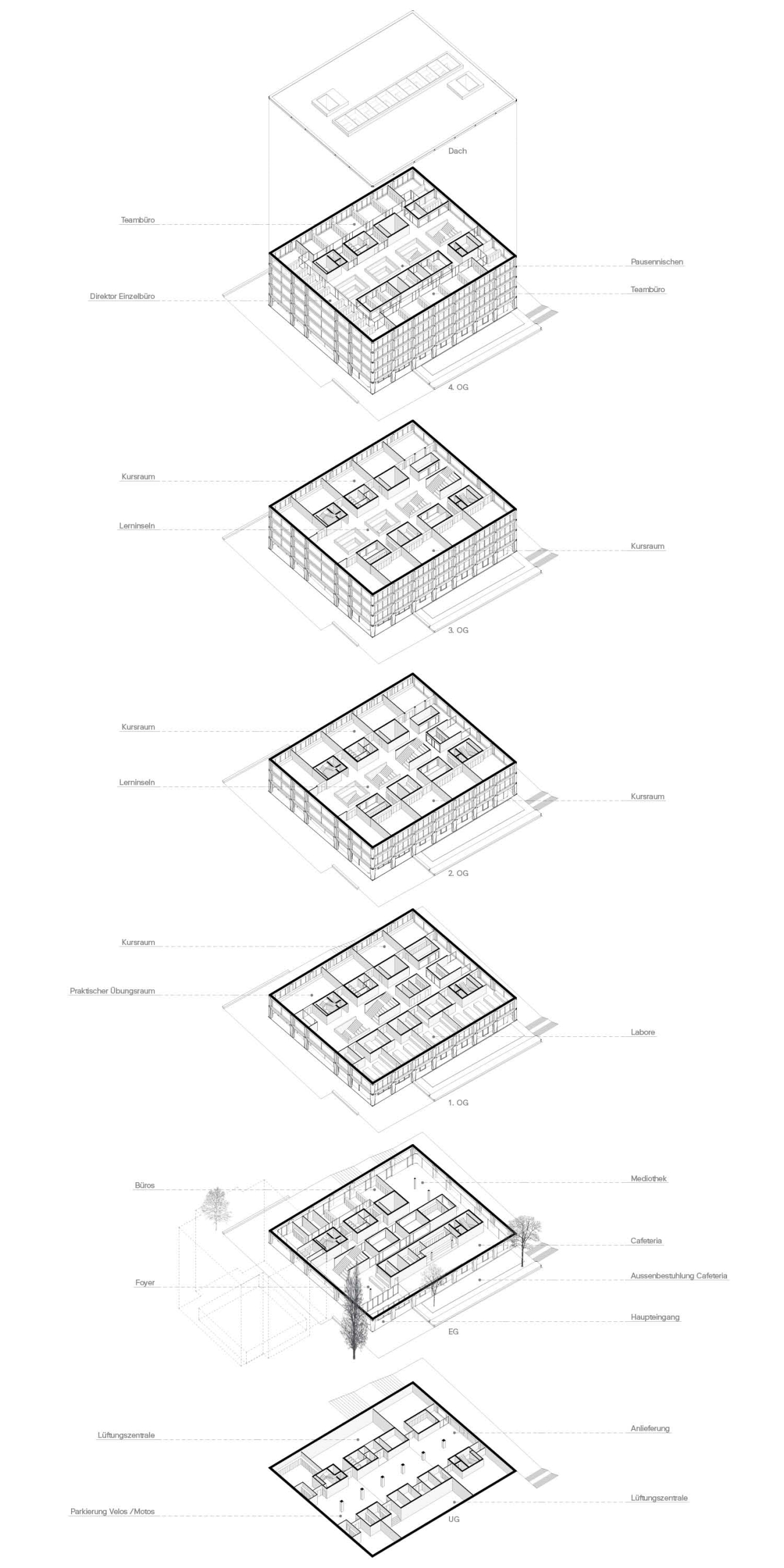
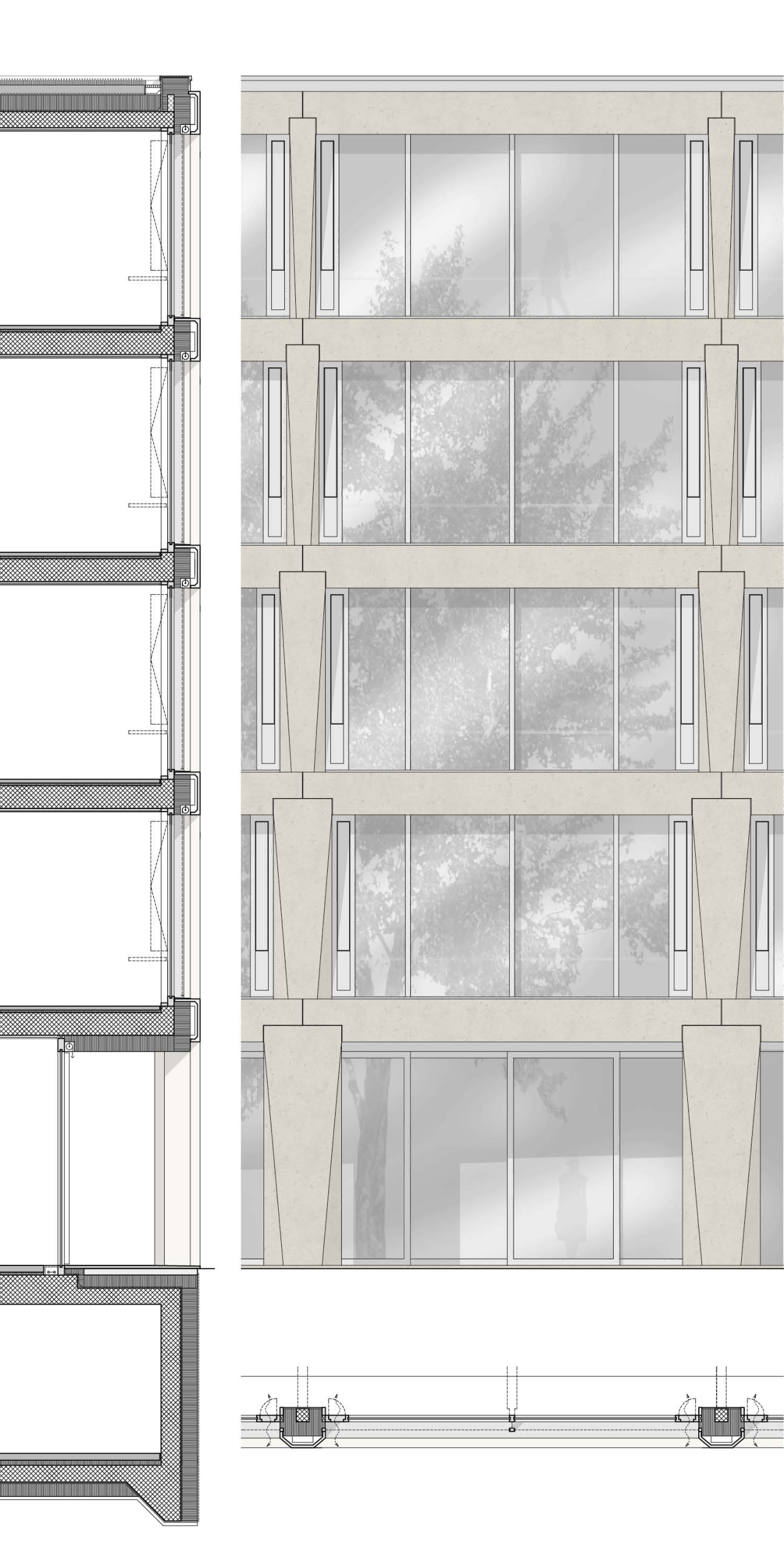
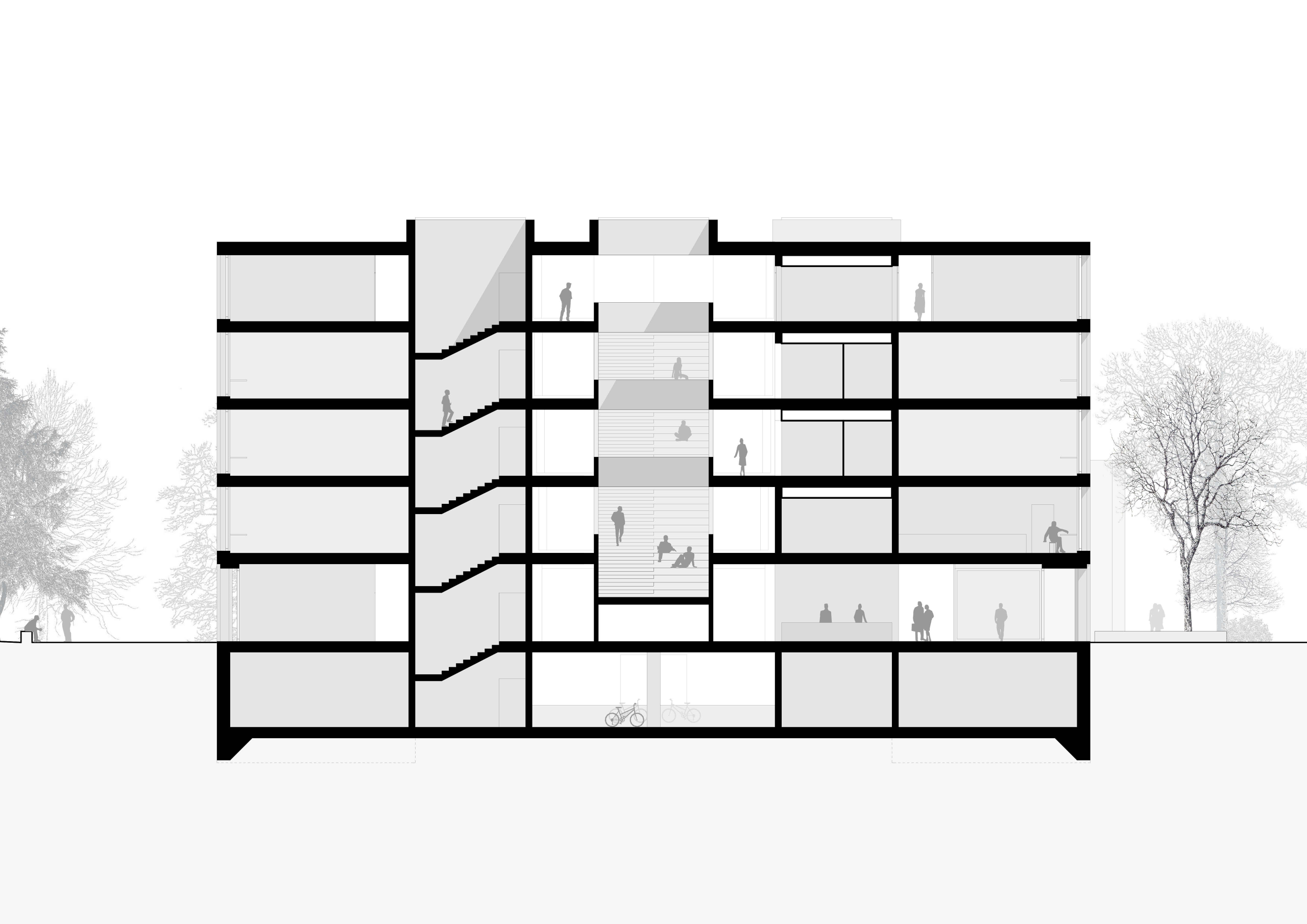
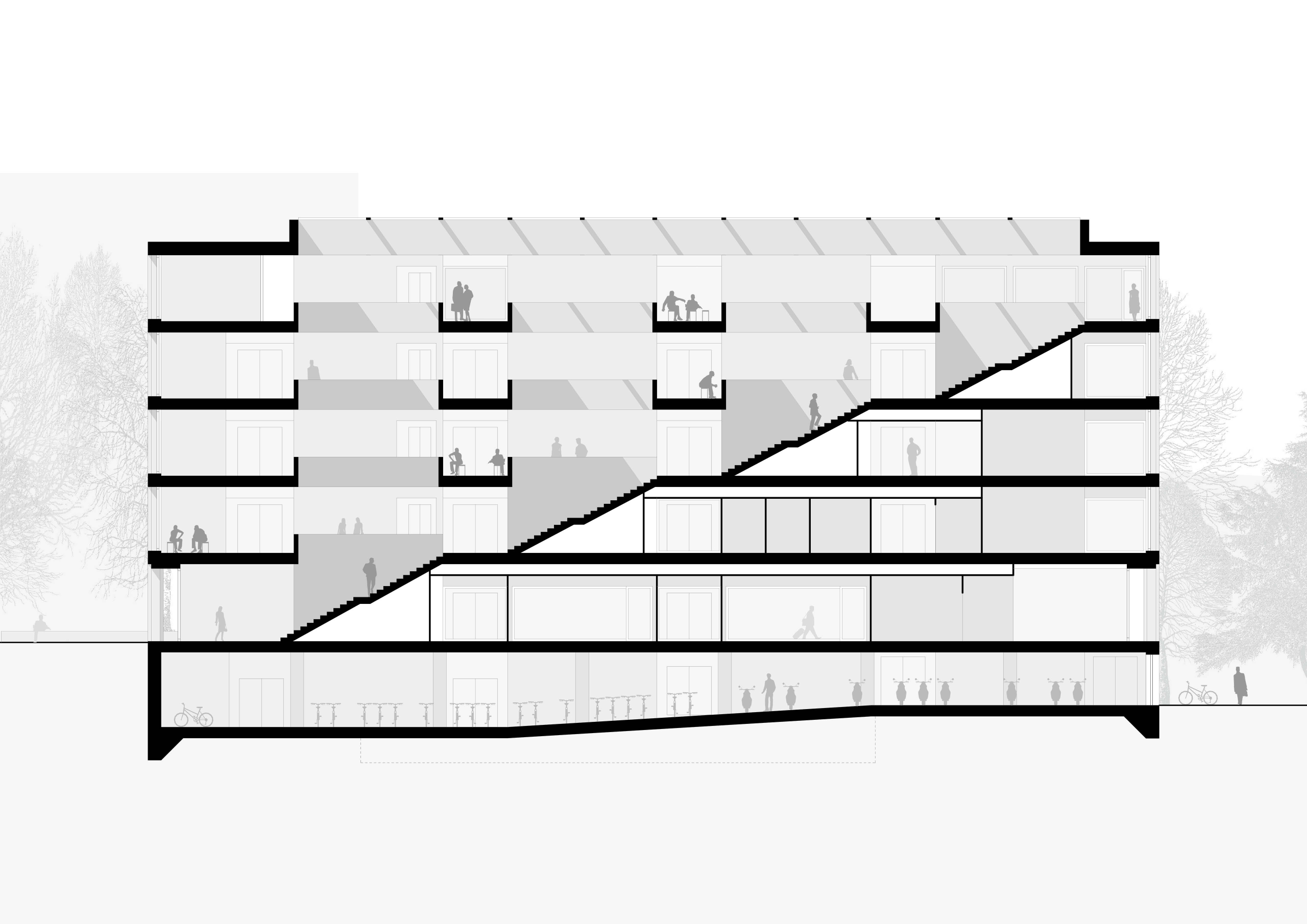
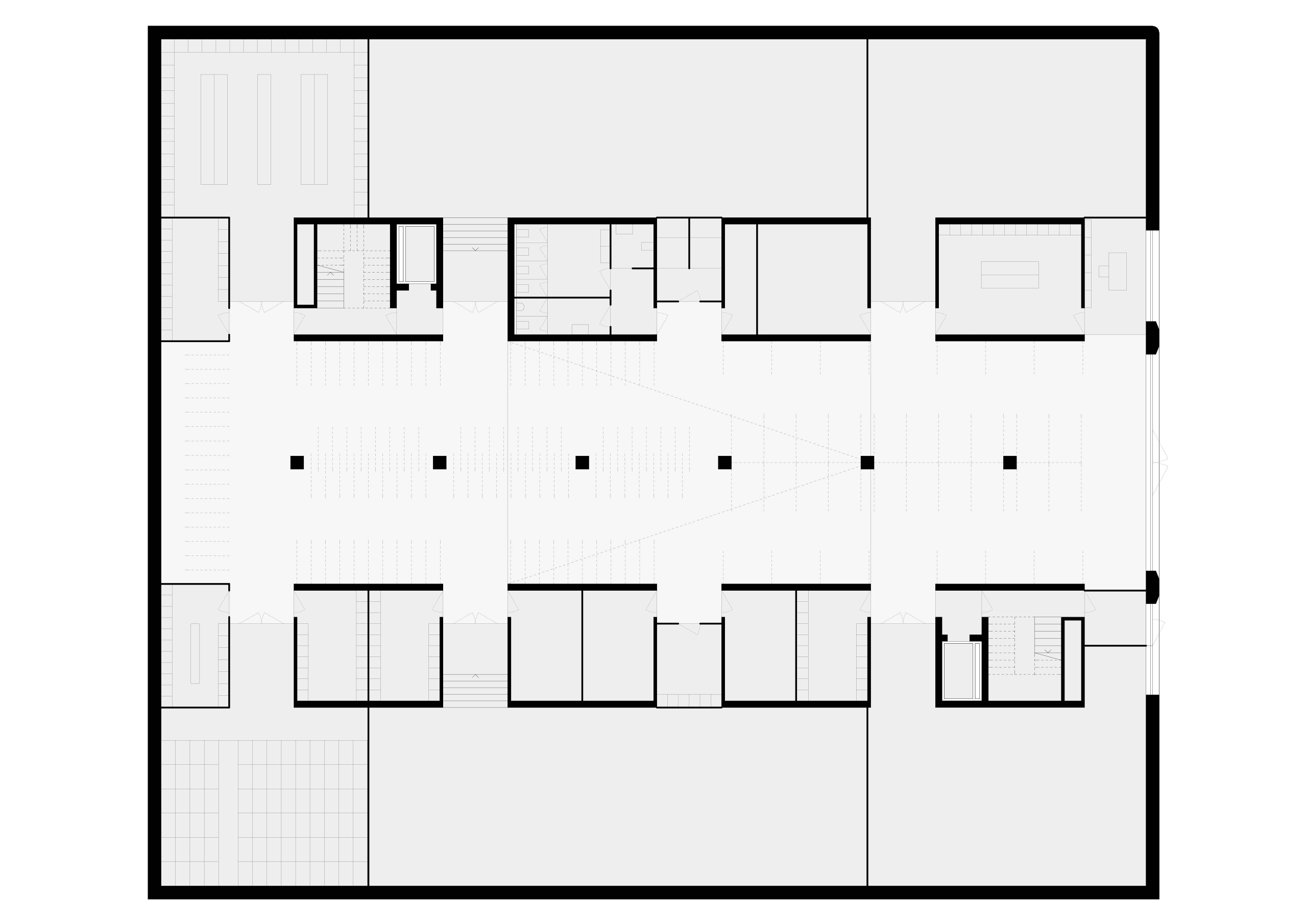
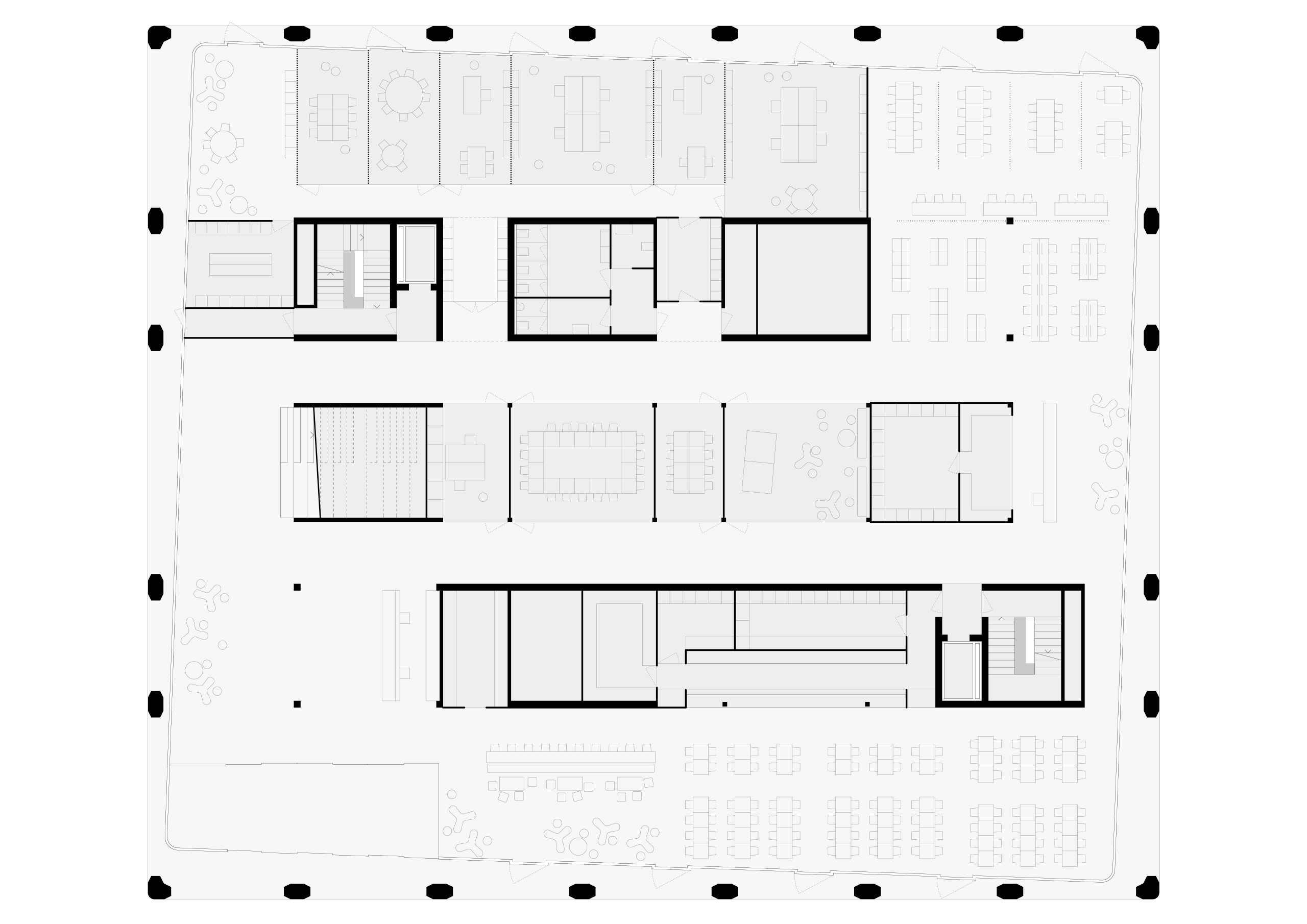
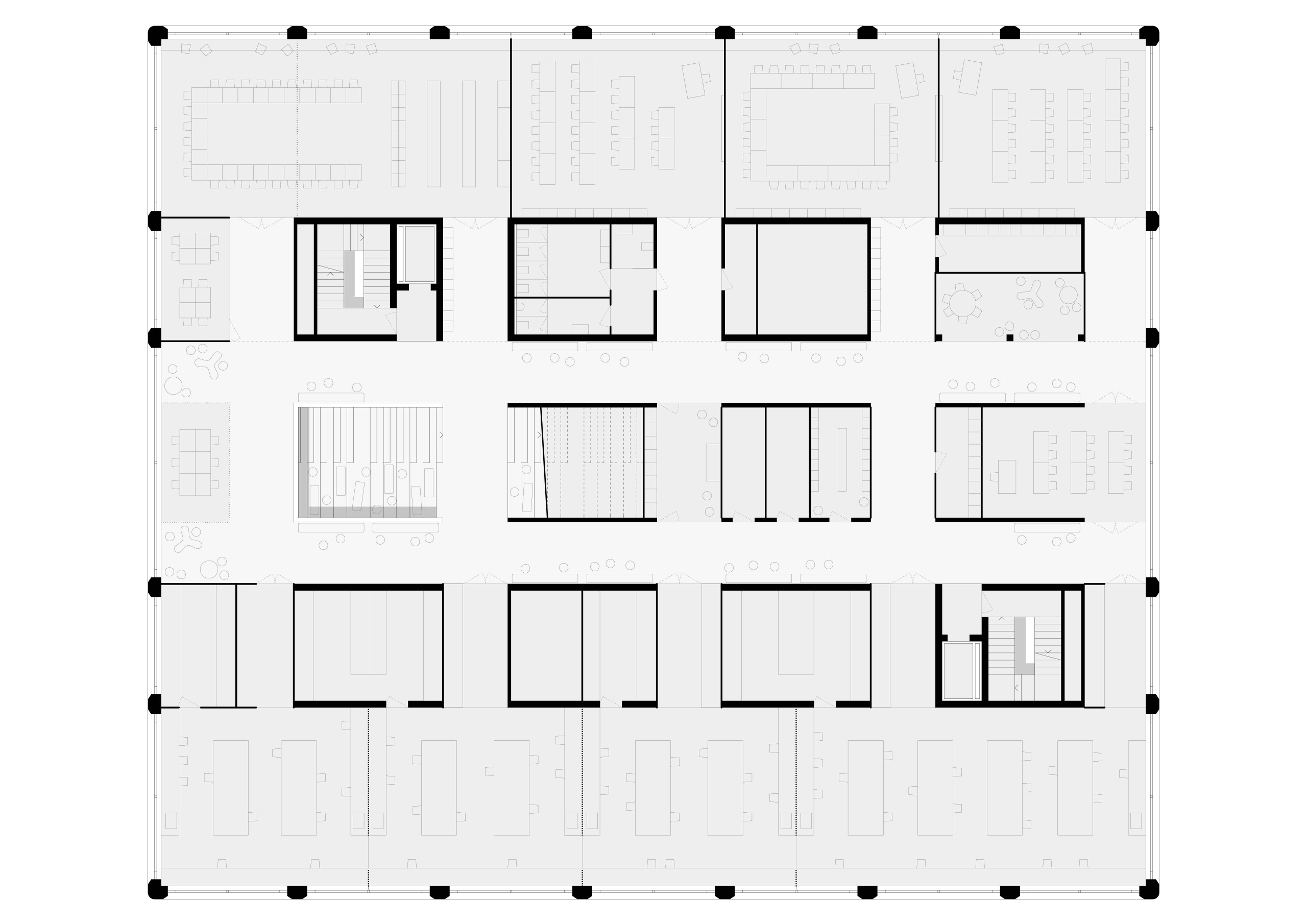
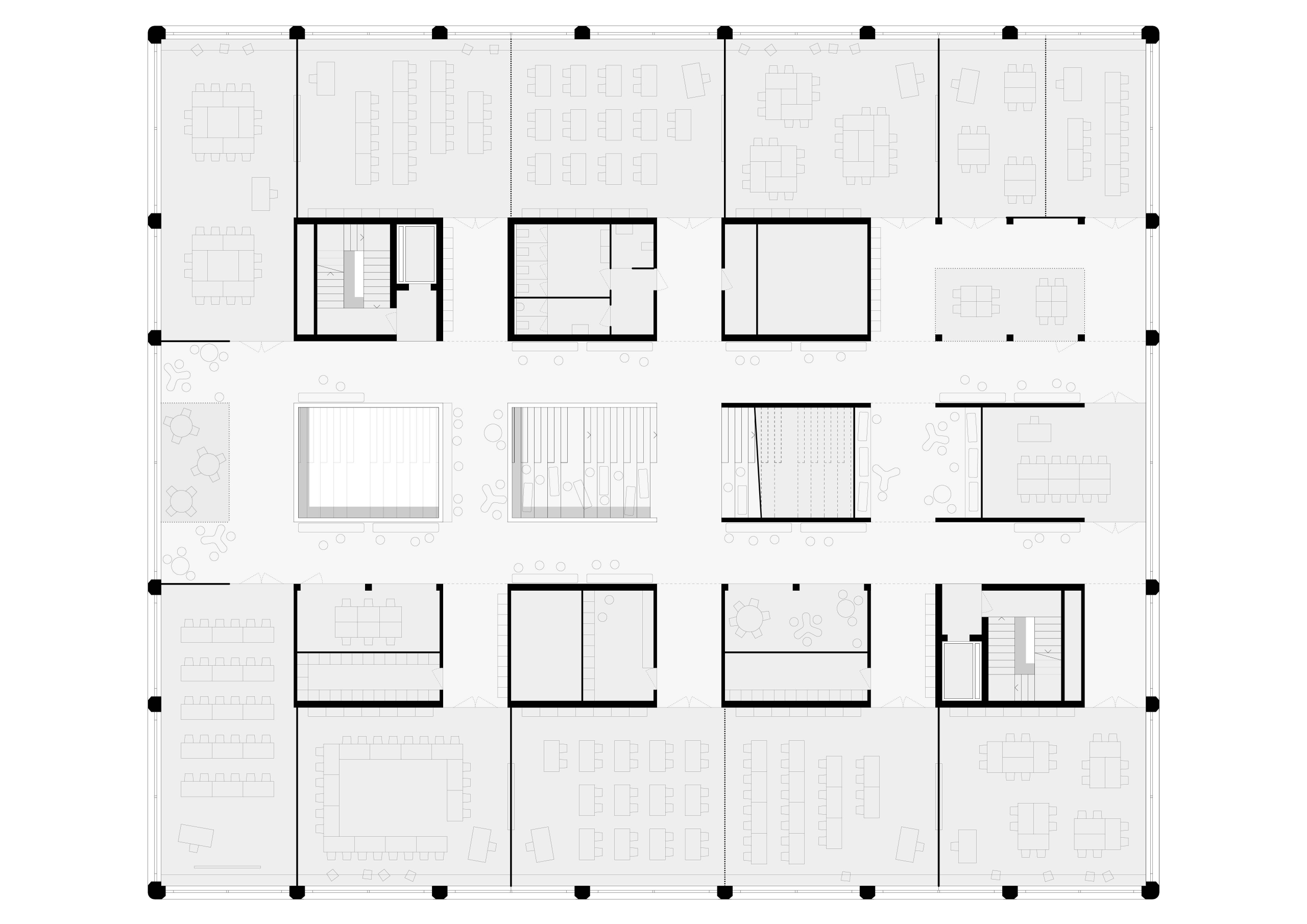
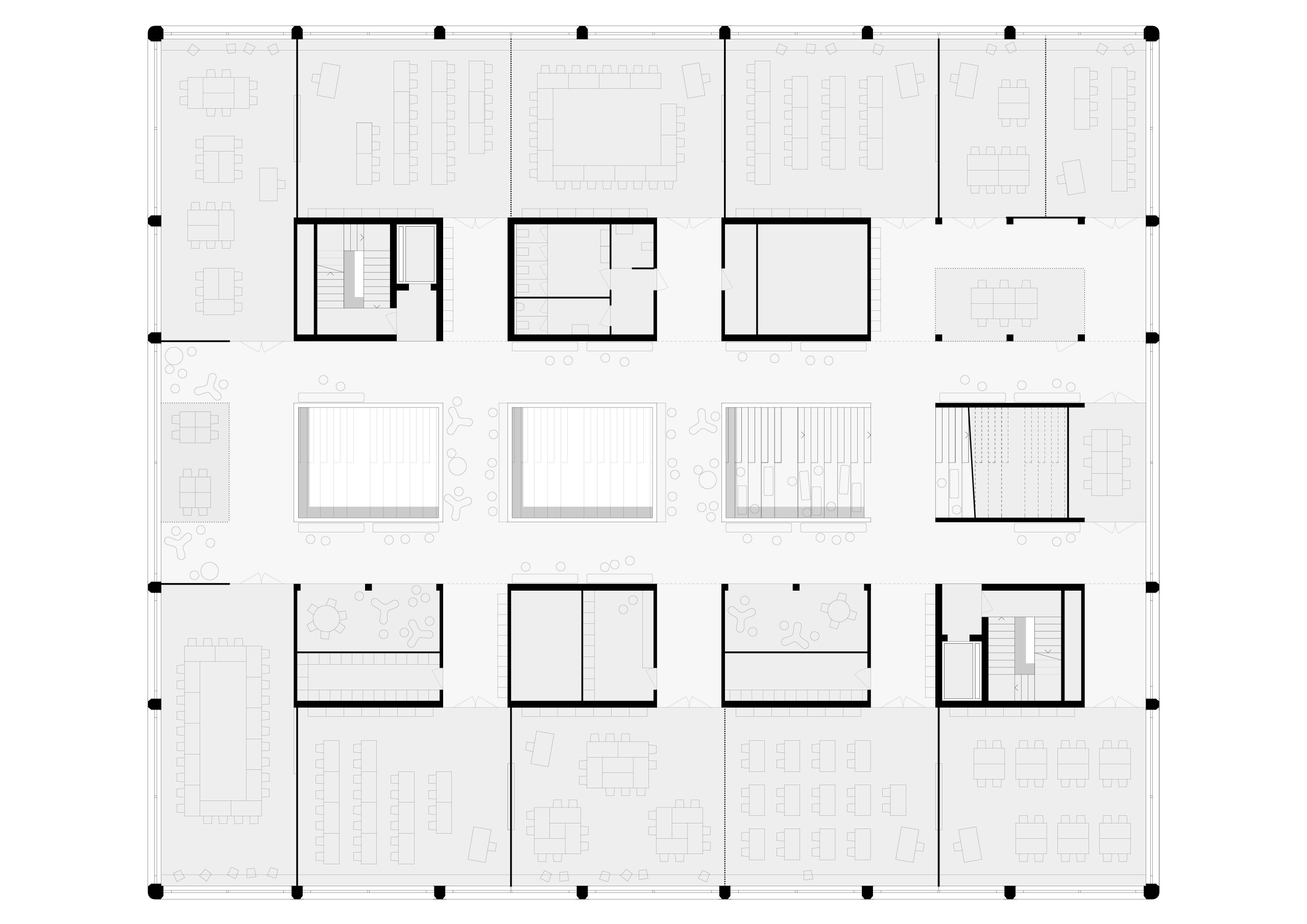
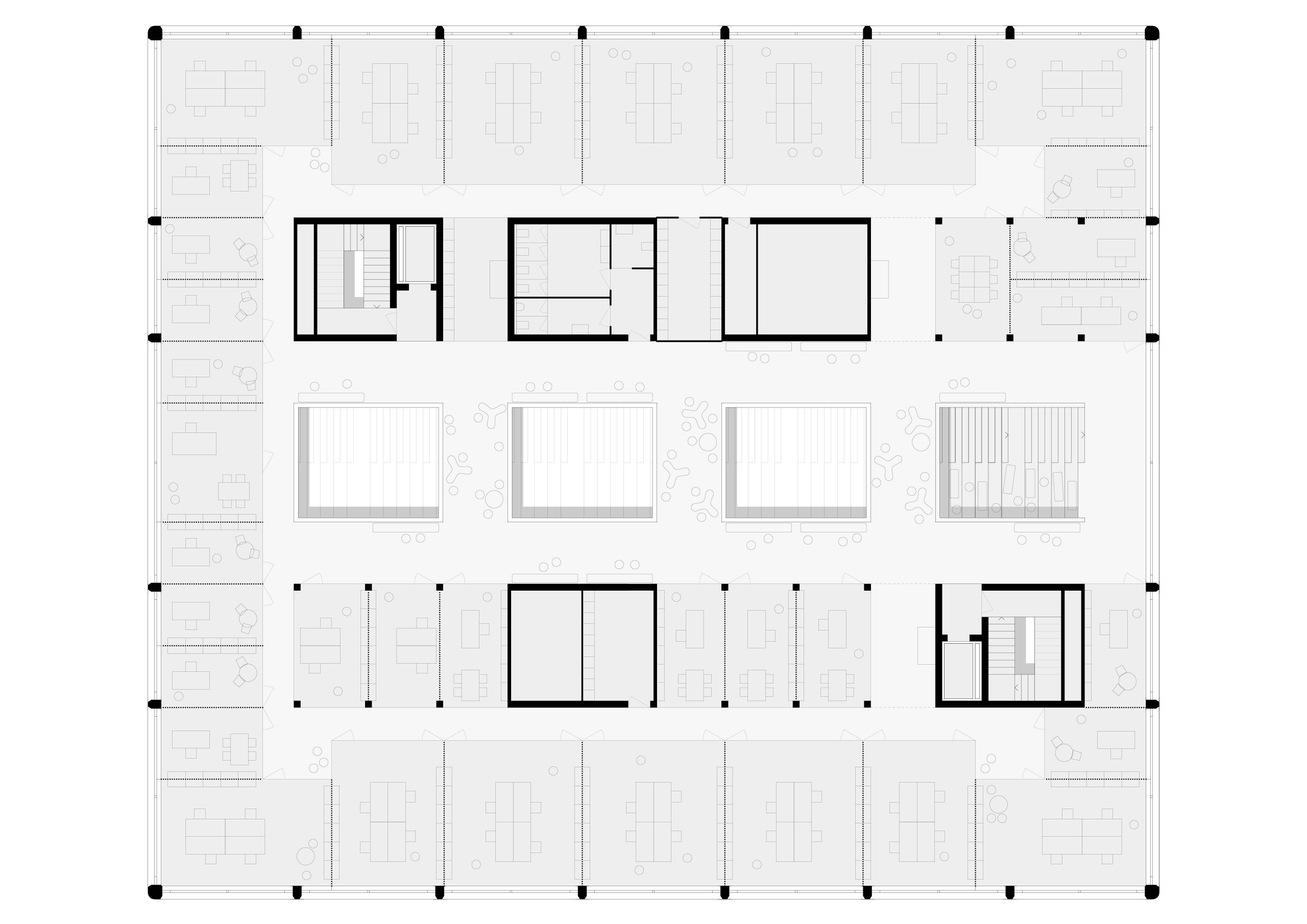
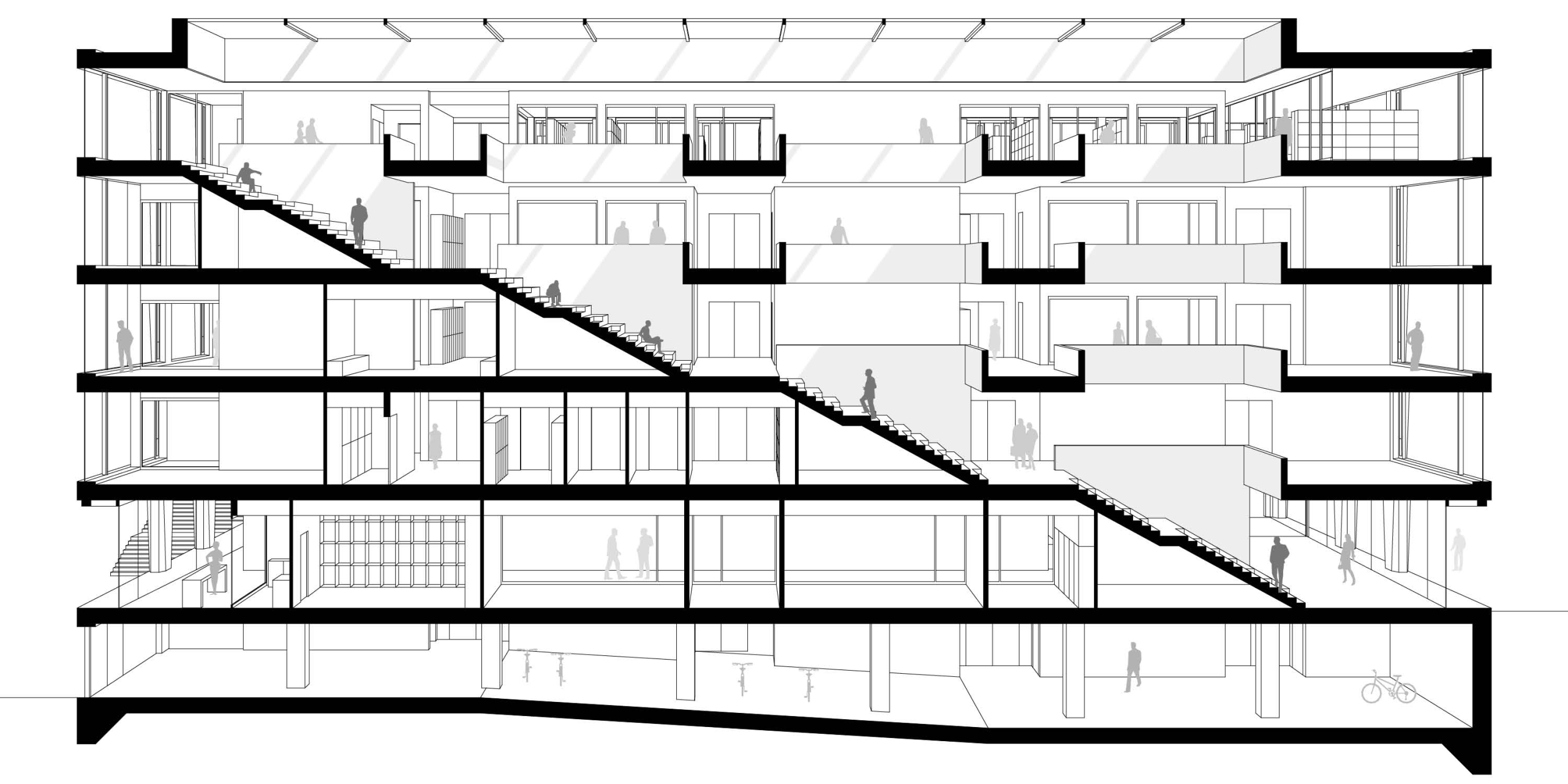
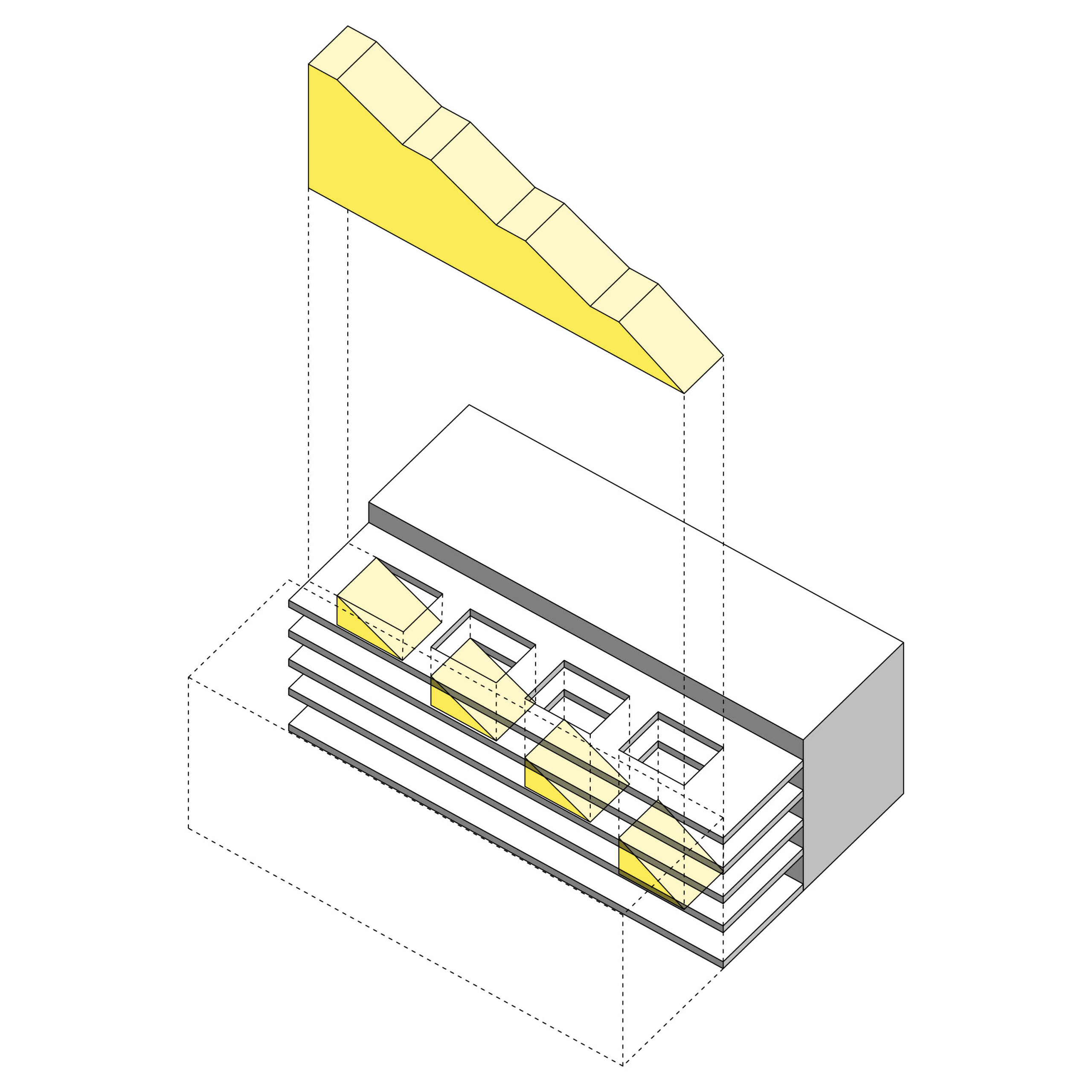
The spatial concept aims to meet the program requirements of spatial flexibility as the plan revolves, schematically, around a five-row layout in which the core one acts as a connecting surface, becoming a multi-purpose area whose function can vary from strict circulation uses to become an actual connecting element between functions, or to be used as a learning space itself. The latter stretches from the East to the West façade and reads as a “street” connecting the North and South facades, bringing a feel of fluidity to the building’s core. Additionally, this central row is generously immersed in all floors with a natural light that pours from a skylight hanging over the staircase. The structural cores are located in order to allow the service row to yield a transitional space between the central core and the spaces along the façade. The structural grid creates the discipline for space modulation inside, becoming manifest in the façade, as a tectonic and stereotomic framework, which enhances the building’s identity and urban form.
Location: Kantonsspital 41, Luzern, Switzerland
Client: Höhere Fachschule Gesundheit Zentralschweiz
Architects-of-record: Stähelin Architekten (Basel) AG
Scope of services: Architecture
Project brief: Faculty building for health studies
Gross construction area: 10,600 sq. m
Project status: 2015 (competition, 2nd-tier)
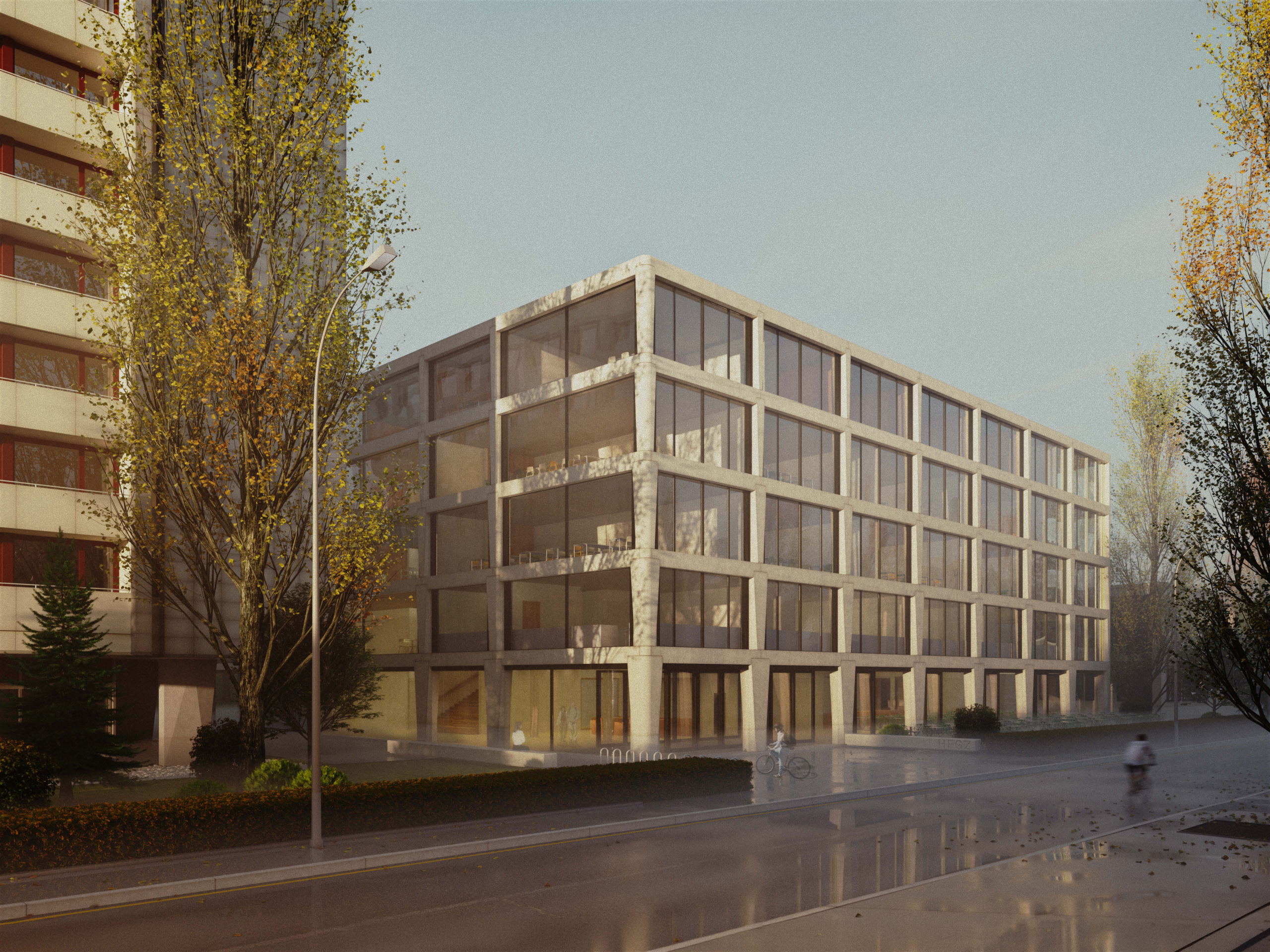
Main access
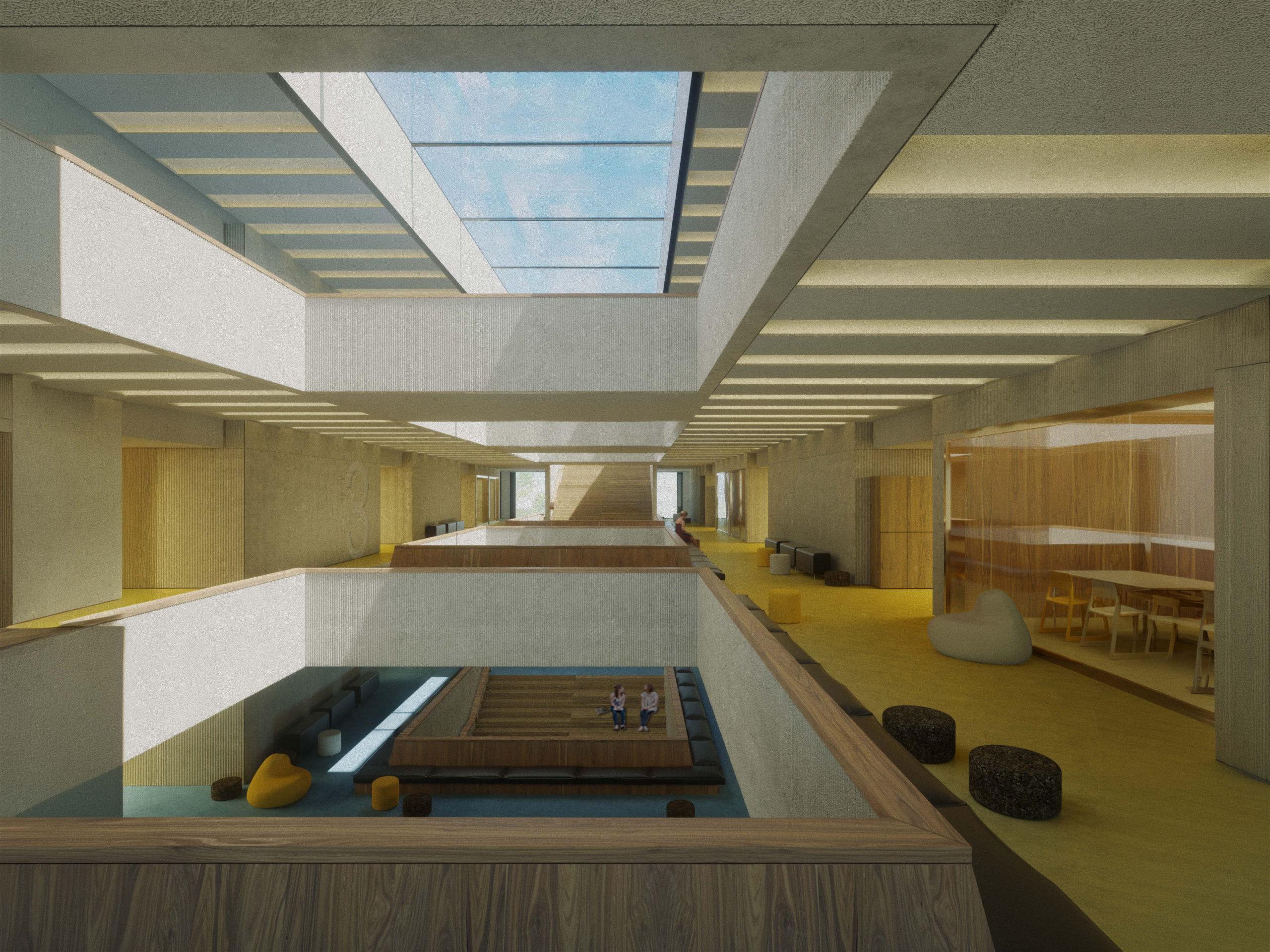
Interior view